



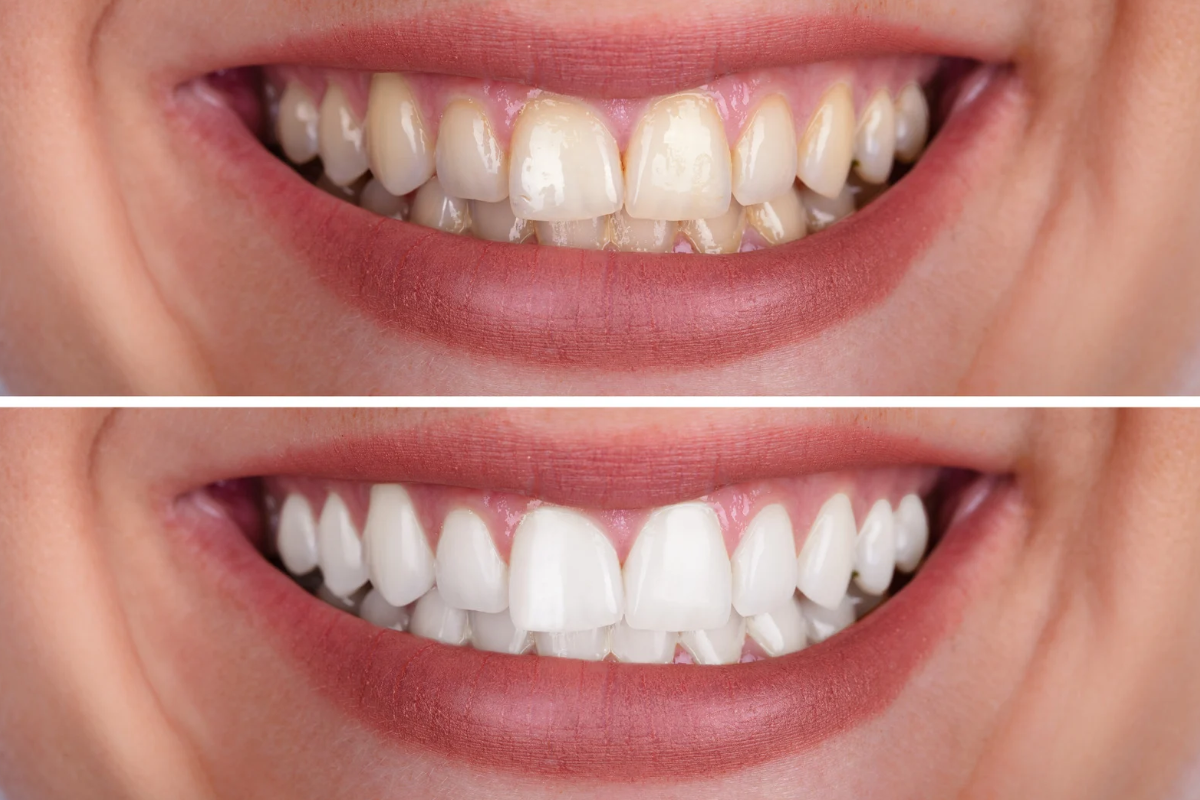
Your teen just finished braces; the wires are finally off, and the smile looks straighter. But there’s a catch: the front teeth look a little yellow, and there’s a thin wire bonded behind them that isn’t coming out anytime soon. So, can they whiten their teeth now, or do they have to wait?
The short answer is that it’s often possible, but it takes some planning. A bonded retainer changes how whitening works, and the wrong approach can lead to uneven color, irritated gums, or a damaged retainer. This guide walks through what to know, what to avoid, and how to get a safe, even result.
What Is a “Permanent” Retainer?
A permanent retainer, also called a bonded, fixed, or lingual retainer, is a thin wire attached to the back surfaces of the teeth with dental bonding material. Most often, it’s placed behind the lower front teeth, and sometimes behind the upper front teeth.
Unlike a removable retainer, it stays in place around the clock. Its job is to help hold teeth in their new positions after braces. The wire isn’t truly permanent, since a dentist or orthodontist can remove or replace it, but it’s meant to stay in for a long time, often years. Your orthodontist will recommend how long that should be.
Can Teens Whiten Their Teeth With a Permanent Retainer?
Often, yes, but it depends on a few things:
- The type of whitening used. Some methods are more compatible with a bonded wire than others.
- How healthy the teeth and gums are. Whitening works best on a clean, healthy mouth.
- The cause of the discoloration. Some stains respond well to whitening, others don’t.
- Whether the teen’s teeth are fully developed and erupted.
- The orthodontist’s and dentist’s guidance. Your teen’s treatment plan matters.
There’s no one-size-fits-all answer, which is why a dental exam comes first.
How a Bonded Retainer Affects Whitening
Uneven Results
Whitening agents work by reaching the enamel surface. Wherever bonding material covers the tooth, the whitening gel can’t reach it. After whitening, the teeth may look lighter overall, while the small area beneath the adhesive stays closer to its original shade. Because the wire sits on the back of the teeth, this may be less noticeable than it would be on the front, but it can still show up when your teen smiles or talks.
The Wire and Adhesive Need Protection
Whitening products aren’t designed to be used on bonding adhesive. Prolonged contact may irritate the area or, in some cases, affect how well the material holds. If the retainer comes loose, teeth can shift.
Strips and Trays May Not Fit Well
Many over-the-counter whitening strips are shaped for flat, smooth tooth surfaces. A wire along the back may keep the strip from sitting flush, and gel may seep onto the gums. Store-bought trays that aren’t custom-fitted can also trap gel against the gum tissue, irritating.
Sensitivity and Gum Irritation
Teens can be as prone to sensitivity as adults, and sometimes more so when gums are already inflamed from braces. A retainer that traps plaque can also make gums tender, so whitening on top of that can be uncomfortable.
Before Whitening, Check for Plaque and Tartar
Here’s something many families don’t realize: a lot of “yellow” teeth behind a bonded retainer aren’t discolored at all. They’re coated.
Plaque and hardened tartar (calculus) build up easily around the wire, especially on the lower front teeth, and can look yellow, brown, or gray. A professional cleaning may brighten the teeth noticeably, with no whitening needed. It also treats gum inflammation, so the gums are healthier before any whitening begins.
This is one reason we often recommend starting with a checkup and cleaning.
Should You Whiten Before, During, or After Braces?
If your teen is still in treatment or just finished, timing matters.
- During braces: Whitening can leave unwhitened squares under brackets, so most providers recommend waiting until braces are off.
- Right after braces: Teeth may be sensitive and gums irritated. Many dentists suggest letting the gums settle first.
- After a bonded retainer is placed: Whitening is often possible, but the approach should be adapted to protect the wire and gums.
- Before any restorations or bonding: If your teen needs fillings, bonding, or veneers someday, whiten first. Cosmetic materials don’t change color with whitening, so shade matching should be done after the final whitening.
Your orthodontist and dentist can coordinate on timing.
Safer Ways to Whiten With a Bonded Retainer
These are general options. Your dentist will recommend what’s appropriate.
Professional Cleaning First
Always the first step. It removes surface stains and tartar and tells us how much whitening, if any, is actually needed.
Custom-Fitted Whitening Trays
A tray made from an impression or digital scan of your teen’s teeth can be adjusted to hold gel only where it’s needed and keep it off the gums. In some cases, the tray can be trimmed or designed around a bonded wire. Ask your dentist whether this approach fits your teen’s retainer.
In-Office Whitening
Professional treatments allow a dental team to protect the gums, monitor sensitivity, and control exposure. The team may take extra steps to protect the retainer area.
Whitening Toothpaste and Other Gentle Options
Whitening toothpastes can help with surface stains over time but usually won’t change the underlying shade much. Check that the product isn’t too abrasive for your teen’s teeth.
Over-the-Counter Strips
These may be less effective or less comfortable with a wire in place. If your teen wants to use them, check with a dentist first, and follow the label carefully.
What to Skip
- DIY remedies like baking soda pastes, lemon juice, charcoal powder, or apple cider vinegar. These can wear down enamel and irritate gums.
- Heavily abrasive whitening products, which can scratch teeth and damage bonding.
- Leaving gel on longer than directed.
- Whitening while gums are inflamed, bleeding, or sore.
- Whitening with unexplained cavities or untreated gum problems.
When Is a Teen Old Enough to Whiten?
There’s no single age that fits every teen. Whitening is generally considered once the permanent teeth have come in and the gums are healthy, and many dentists prefer to evaluate on a case-by-case basis. Younger teens may have larger pulp chambers and more sensitivity. That’s why a dental exam, and a parent in the conversation, matters. If your teen is under 18, we’ll want to talk with you about the plan, comfort, and expectations.
What Might Whitening Not Fix?
Whitening works on natural tooth enamel, not on everything. It may not help with:
- White spots left after braces (from early enamel changes), which can sometimes look more noticeable after whitening
- Gray or brown discoloration from injury or medication during tooth development
- Fillings, crowns, bonding, and veneers, which don’t change color
- Stains in cracks or worn areas
If your teen has white spots or other concerns, tell us. There may be other treatments, such as enamel-restoring approaches or cosmetic bonding, that suit their situation better.
Keeping a Bonded Retainer (and Teeth) Clean
Healthy habits support a brighter smile with or without whitening.
- Brush twice a day with fluoride toothpaste, paying attention to the back of the front teeth where the wire sits
- Floss daily using floss threaders, super floss, or a water flosser designed for wires
- Use interdental brushes if your dentist recommends them
- Limit staining drinks and foods, such as dark sodas, sports drinks, coffee, tea, and sauces
- Limit sugary snacks and drinks
- Don’t bite or pick at the wire
- Keep regular checkups and cleanings, usually every six months, or as recommended
When to Call Your Dentist or Orthodontist
Contact the office if your teen notices:
- A loose, broken, or poking wire
- A retainer that comes off or seems to move
- Gum swelling, redness, or bleeding that doesn’t improve
- Sharp or lingering tooth sensitivity after whitening
- Hard buildup around the wire
- Teeth that start to shift, or a bite that feels different
- White or brown spots appearing near the wire
Don’t try to fix a broken retainer with glue. Call the office so it can be repaired properly.
Finding Teeth Whitening in Plano, Texas
Whitening for teens works best when it’s planned, not rushed. You want a team that checks the teeth first, explains what’s realistic, and keeps comfort and gum health front and center.
At Grin Pediatric Dentistry, we provide dental care for infants, children, and teens. If you’re exploring teeth whitening in Plano for your teenager, our team can examine their teeth and gums, check for plaque or stains around the retainer, and talk through options in plain language. Our services are designed to keep care age-appropriate, clear, and comfortable for both teens and parents.
When you visit, you can expect:
- A gentle exam and a conversation about your teen’s goals
- A check of the retainer, gums, and enamel
- Honest guidance on whether whitening, a cleaning, or another option fits best
- A plan that coordinates with your orthodontist when needed
Frequently Asked Questions
Can you whiten teeth with a permanent retainer?
Often, yes, but results may be uneven, and the method matters. Check with your dentist first so they can recommend an approach that protects the wire and gums.
Will whitening strips damage a bonded retainer?
They may not fit well around the wire, and gel on the adhesive isn’t ideal. Ask your dentist before using strips.
Why do my teen’s teeth still look yellow after whitening?
Possible reasons include plaque or tartar, areas covered by the adhesive, deep stains that don’t respond well, or restorations that don’t change color. An exam can help find the cause.
Is whitening safe for teenagers?
It can be, once permanent teeth are in and gums are healthy, but each teen is different. A dentist can evaluate sensitivity, enamel, and gum health before recommending anything.
Should my teen whiten before or after the retainer is placed?
Many dentists prefer whitening before placement, when it’s an option, since it avoids covered areas. If the retainer is already in, whitening can often still be done with modifications.
Brighten Your Teen’s Smile the Safe Way
A bonded retainer doesn’t have to put a brighter smile out of reach. With a checkup, a cleaning, and a whitening plan tailored to your teen’s teeth and retainer, you can aim for a more even, comfortable result.
If your teen is thinking about whitening, or you’re unsure what’s causing the yellow look, contact Grin Pediatric Dentistry to schedule a visit. Our team is here to provide gentle, clear, family-friendly care.

New Patients & Emergency Appointments Welcome!
